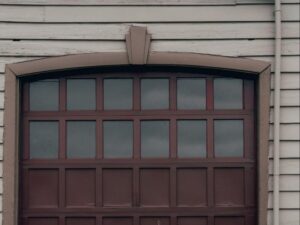
Stand inside a closed garage on a breezy day and look around the door perimeter. Is the light at the top, along one jamb, or under the bottom edge? The right garage door draft seal depends on where the gap is and whether the door itself is sitting square.
We’re Garage Door Doctor, a garage door service company based in Eatonton, Georgia. We help homeowners in Eatonton, Greensboro, and Madison sort out door fit and repair questions. Mark, our owner, describes the work as “fast, honest repairs.” Sometimes a worn seal is the answer; sometimes another strip would only hide a door problem.

Match the Gap to the Part That Should Close It
| Where the Draft Enters | Part to Inspect Visually | When a Seal Alone May Not Help |
| Across the top of the closed door | Top molding or top seal | Door does not meet the header evenly |
| Along one or both sides | Jamb weatherstrip and door alignment | Door is crooked, rubbing, or off track |
| Along the floor | Bottom astragal, retainer, threshold, floor surface | Door bottom is uneven or floor slopes sharply |
| Around the entry door into the house | That separate door’s weatherstrip | Garage-door perimeter work will not close this gap |
This is a visual check with the door closed and still. You do not need to move tracks or springs to identify a draft. If you see a loose cable, broken spring, crooked door, or displaced bracket, stop the inspection. Do not use the garage door until a technician has inspected it. Door & Access Systems Manufacturers Association (DASMA) guidance warns that spring and cable problems can cause injury.
Top Seal: The Gap You Notice From Inside
A top seal closes the space where the top panel meets the header. Light across the entire top can point to a worn or missing seal, but one corner with a much larger gap may indicate fit or alignment trouble. A new strip cannot make an uneven door square.
Look from inside while the door is closed and stationary. Note whether the gap is even across the width, whether the molding is torn, and whether wind is pushing a flexible edge inward. Do not push on the door or loosen the top fixture to “test” it. The technician can determine whether the seal profile is wrong, the molding is damaged, or the door needs adjustment.
A little visible daylight is not a measure of the exact air leakage rate. Wind direction, pressure, and other openings affect what you feel. Still, a clear top gap gives you a useful place to start the conversation.
Side Jambs: Contact Matters More Than Thickness
Side weatherstripping usually mounts to the jamb and meets the door face. A strip that is brittle, torn, or pulled away from the jamb may no longer make continuous contact. But if the door scrapes on one side and shows a wide opening on the other, do not solve that with extra-thick rubber. Ask for a door-fit inspection.
Check both sides from a safe standing position. Write down whether the gap runs the full height or appears only at one panel, and whether the door has been rubbing the frame. Those details help distinguish deteriorated trim from a mechanical problem. Our garage door repair service is the appropriate path when the door is binding or visibly misaligned.
Weatherstrip should meet the closed door without being jammed so hard that operation changes. The exact profile and fastener method vary with the opening and product. If you are replacing a simple accessible jamb strip, follow that product’s instructions and keep clear of moving parts; do not alter the tracks, rollers, cables, or brackets.
Bottom Edge: Distinguish the Rubber From the Floor
The bottom seal, also called an astragal, follows the lower edge of the door. On many doors it slides into a retainer; on others the design differs. You must match the replacement to the existing retainer or the manufacturer’s specifications rather than buy by width alone.
If daylight shows under one short section, examine the floor and seal from a distance with the door closed. A split or flattened rubber edge suggests wear. A sloped floor, chipped concrete, or door sitting higher on one side suggests a fit problem that a new insert may not solve. Do not crawl under, lift, or hold the door to inspect it.
A threshold attached to the floor may be useful in some openings, but it should not be treated as a fix for a crooked door. It also needs to suit the garage floor and any drainage pattern. Do not add a raised strip that blocks water from leaving or interferes with the door’s safe closure.
Seal First or Replace the Door?
A sound, balanced door with worn perimeter rubber may need only appropriate weatherstripping and fit checks. Replacing the entire door just to address an ordinary draft can be disproportionate. This is especially true for a detached garage where a premium insulation upgrade offers little benefit for the way you use the space.
If panels are damaged, the door is warped, hardware is failing, or the door cannot close evenly, discuss repair and door installation options separately. A door that looks straight from the driveway can still have a hardware or opening issue that an on-site assessment must resolve.
An insulated door and an airtight door are not the same thing. DASMA explains that panel insulation ratings do not represent the complete door assembly. Perimeter gaps are a separate fit and air-leakage question. Before paying for a new insulated door, decide whether the problem is heat flow through panels, air moving around edges, or both.
What About Energy Bills and the Door Into the House?
ENERGY STAR says sealing air leaks and adding insulation can improve comfort and efficiency, and it recommends matching the project to the actual draft. That broad household guidance does not promise a particular saving from garage-door weatherstripping alone. An unconditioned, detached garage may have a very different payoff from an attached garage beside living space.
If a draft is felt in the house, check the separate door between the garage and living area, not just the large overhead door. A garage-door seal cannot repair air leakage at that entry door. For any combustion-appliance or ventilation concern, get appropriate building or heating-system advice rather than sealing blindly.
In Central Georgia, the goal is not to claim that every garage needs a winter retrofit. A seal can also help keep windblown dust and rain away from the door perimeter, subject to the opening’s design and drainage. Inspect the actual gap before choosing a material.
What Should a Quote Include?
Ask which edge is leaking, whether the existing seal or retainer is damaged, whether the door closes evenly, and what material and labor the price covers. A straightforward jamb strip is a different scope from a bottom retainer replacement or a door adjustment. Request the complete price before approving work.
We do not have a client-approved local price range for garage door weatherstripping. The cost depends on door size, seal profile, retainer condition, labor, and any needed fit repair. A generic national estimate would not tell you what your particular opening needs. If the seal is not the root cause, honest diagnosis may save you from buying it twice.
Frequently Asked Questions
Where Should I Check for a Garage Door Draft First?
With the door closed and still, look for daylight at the top, sides, and floor. Note whether the gap is continuous or limited to one corner. Do not operate a crooked or damaged door to investigate further.
Can I Replace Side Weatherstripping Myself?
A simple accessible jamb strip may be manageable if the door is sound and you follow the product instructions. Do not touch tracks, rollers, springs, cables, or brackets. If the door is rubbing or out of alignment, get a technician to inspect it first.
Will a New Bottom Seal Fix an Uneven Concrete Floor?
Not necessarily. A flexible seal can accommodate some variation, but the floor profile, retainer, and door fit determine the result. An on-site assessment is more useful than assuming thicker rubber will close every gap.
Is a Threshold Better Than a Bottom Seal?
They serve different positions: one is on the floor and one is on the door. The opening’s drainage and the door’s closure decide whether a threshold belongs there. Do not add one that blocks drainage or keeps the door from closing properly.
Will Weatherstripping Lower My Energy Bill?
It may reduce air movement around the opening, but no specific bill savings are guaranteed. The garage layout, attached living space, and other leaks matter. ENERGY STAR’s household air-sealing guidance is not a garage-door-specific savings promise.
Do I Need an Insulated Door to Stop Drafts?
No. Insulation reduces heat transfer through the door construction; perimeter seals address gaps around it. Start with the problem you can identify, then compare upgrades if comfort is still a concern.
What if My Door Is Crooked and Drafty?
Do not use the garage door until a technician has inspected it. A crooked door can involve more than weatherstrip. Do not force it closed or adjust tension hardware yourself.
Ask for the Right Fix, Not Just More Rubber
Garage Door Doctor serves Eatonton, Greensboro, and Madison, Georgia. Call 706-816-7199 and tell us where you see the gap, whether the door sits evenly, and whether it still operates normally. We can assess whether a seal, adjustment, or repair is the sensible next step and explain the price before work begins.