It is 4:30 on a hot afternoon, and the garage feels like the heat has been waiting behind the door all day. If that space shares a wall or ceiling with your home, or if you work there, an insulated garage door in Central Georgia can be a sensible upgrade.
But insulation is not automatically worth the extra money. A detached garage used only for parking and lawn equipment may get little practical benefit from a premium thermal package, especially when the existing door still works well.
We are Garage Door Doctor, a garage door company based in Eatonton, Georgia. Our approach is straightforward: answer the phone, explain the options honestly, and help you buy the door that fits your home instead of the most expensive door on the page.
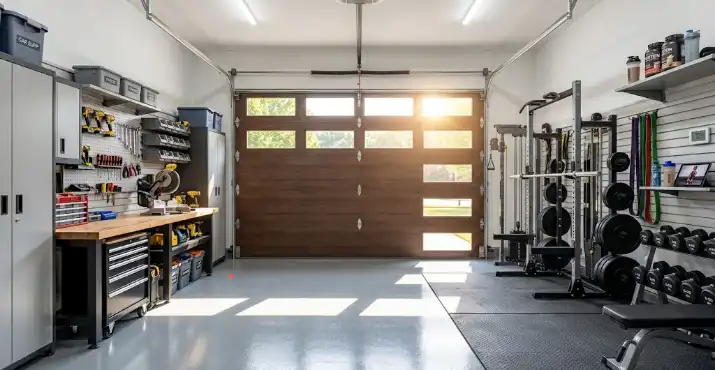
The Short Answer for Central Georgia Homes
Choose an insulated door when the garage is attached to the house, has a room above it, doubles as a workshop or gym, or needs a quieter and more finished-feeling door. Insulation reduces heat transfer through the door, but it does not turn an unconditioned garage into a conditioned room or guarantee a particular reduction in utility bills.
Skip the insulation upgrade when the garage is detached, rarely occupied, well separated from living space, and used for items that are not temperature sensitive. In that situation, good door fit, dependable hardware, proper perimeter seals, and a price you are comfortable with may matter more.
The decision is less about whether insulation is “good” and more about whether the garage affects the way you use the house. Start with the room layout, then compare construction and thermal ratings.
When Insulation Is Usually Worth Buying
Your Garage Is Attached to the House
A garage door covers a large opening. An insulated door is designed to reduce heat transfer through that opening compared with a similar non-insulated construction.
That difference matters most when the garage shares a wall with a kitchen, hallway, bedroom, or other lived-in area. It can also matter when a room sits directly above the garage, although the door is only one part of the surrounding building assembly.
Do not treat the door as a substitute for air sealing, wall insulation, ceiling insulation, or a properly weather-stripped door between the garage and the home. Think of it as one component in the whole garage envelope.
You Spend Real Time in the Garage
If the garage is a workshop, exercise area, hobby room, or project space, slowing heat transfer through the door can make the space more usable. The result still depends on the walls, ceiling, shared boundaries, air leakage, and how the space is used.
That distinction is important. Insulation can moderate conditions; it does not provide air conditioning, heating, or humidity control.
You Want a More Substantial Door Construction
Insulated doors are commonly offered in multi-layer constructions rather than as a single sheet of steel. The exact layers, insulation material, thickness, interior backing, and thermal rating vary by model, so compare the product specification instead of assuming every insulated door is built the same.
Garage Door Doctor installs and replaces doors from DoorLink, C.H.I., Haas, and Amarr. Those brands offer different designs and construction choices, which gives us room to compare practical options without forcing every homeowner into one product line.
The Garage Door Faces Strong Afternoon Sun
A west-facing door can absorb heat for hours before dinner. Insulation can slow heat movement through the door, but windows, dark finishes, perimeter gaps, attic conditions, and the rest of the garage construction also affect what you feel inside.
This is where an on-site look helps. A door with a reasonable thermal package and good fit may be a smarter purchase than chasing the highest advertised number while ignoring gaps around the opening.
When Insulation Is Probably Not Worth the Upgrade
A detached garage used for parking, tools, and yard equipment is the clearest case for considering a non-insulated door. If nobody spends time there and the space does not affect rooms in the house, the comfort benefit may not justify the added price.
A non-insulated door can also be reasonable for a rental property, outbuilding, or budget-first replacement when the main goal is secure, reliable operation. Non-insulated construction is a normal product choice, not an automatic mistake.
Do not replace a sound door solely because a brochure shows a higher R-value. If your current door is balanced, undamaged, operating safely, and suitable for how you use the garage, improving worn perimeter seals may be the more proportionate first move.
There is another reason to skip the premium package: the rest of the garage may be too open or under-insulated for the door upgrade to change your experience much. Open vents, unfinished walls, an uninsulated ceiling, frequent door cycles, and large air gaps can all limit what one insulated surface accomplishes.
Honest answer: sometimes the basic door is the right door. We would rather explain that before you spend the money.
How to Read R-Value Without Getting Misled
R-value describes resistance to heat flow through a material. Higher is better for the material being rated, but that number may describe only the insulation inside a door section rather than the performance of the installed door as a complete assembly. [1]
A garage door also includes section joints, edges, hardware interfaces, and sometimes windows. Those details help explain why a high center-of-panel or section R-value does not tell the whole story.
This is the common shopping mistake: comparing two large R-values without checking what was actually measured. One brochure may report insulation material performance while another reports something closer to a complete assembly, so the numbers may not be directly comparable.
Ask three questions:
- Does the R-value apply to the insulation, the door section, or the whole door?
- Does the model have a tested whole-door U-factor?
- Are windows included in the tested configuration you are buying?
If the salesperson cannot answer, ask for the current product specification. A smaller, clearly defined number is more useful than a larger number with no test boundary.
Why U-Factor Is Better for Whole-Door Comparisons
U-factor measures the rate of heat transfer through a material or assembly. Lower is better, and a tested whole-door U-factor accounts for the complete door assembly rather than only the insulation in the middle of a panel.
DASMA warns that you cannot simply take the inverse of a door section’s R-value and call the result the U-factor for the entire door. The whole assembly must be evaluated, because section R-value does not include every path heat can take through the finished door.
When available, use a tested whole-door U-factor to compare complete assemblies. Compare similarly configured doors because windows, section joints, edges, and seals affect the finished system.
For a homeowner, the practical rule is simple. Use tested whole-door U-factor when two models publish it on the same basis; use R-value as supporting information, not as a promise about the temperature of your garage or your energy bill.
What Door Construction Should You Compare?
Non-Insulated, Single-Layer Construction
This is the budget-first choice. It can make sense for a detached or lightly used garage where thermal performance is not important.
The tradeoff is that you are buying a door without an insulation layer. Compare the gauge, panel design, available wind-load configuration if applicable to the opening, and the quality of the complete installed system rather than judging it by price alone.
Insulated Two-Layer Construction
A two-layer door typically pairs an exterior door skin with insulation and a backing or retention system, depending on the model. Ask what material is exposed on the garage side and how the manufacturer defines the construction.
This category can be a practical middle ground when you want some thermal resistance but do not need the most substantial available build. Do not assume “two-layer” means the same thing across brands.
Insulated Three-Layer Construction
A three-layer, steel-insulation-steel door has an exterior skin, insulation core, and interior steel skin. It is often the option homeowners consider when the garage is visible from living areas, used frequently, or expected to feel more finished.
The right choice still depends on the model’s published ratings, door size, windows, design, and budget. More layers do not replace correct measurement, spring selection, track setup, perimeter seals, and opener compatibility.
How Much Does an Insulated Garage Door Cost?
Insulated garage door pricing varies widely with size, construction, insulation, windows, finish, track work, removal, structural repairs, opener compatibility, and local labor. A measured, model-specific local quote is more useful than a broad consumer average.
Your actual total can move for several reasons:
- Door width, height, and number of openings
- Steel, wood, aluminum, composite, or other door material
- Insulation type, thickness, and complete door construction
- Window design and glass choice
- Standard color versus specialty finish
- Decorative hardware and custom design work
- Condition of tracks, framing, seals, and related components
- Removal and disposal of the existing door
- Whether the existing opener suits the new door
The useful local number comes from measuring the opening and specifying the exact door. Ask the proposal to identify the model, construction, insulation, windows, finish, removal, track work, opener work, and complete installed scope.
Garage Door Doctor provides installation and replacement options and can also discuss a LiftMaster opener when the project needs one. For opener-specific planning, see our garage door opener installation service.
A Practical Buying Checklist
First, decide what problem you want the new door to solve. Comfort in an attached garage, a quieter feel, a finished interior, curb appeal, reliable operation, and a strict budget can point to different products.
Next, describe how the garage connects to the house. Note shared walls, rooms above, how long you spend in the space, which direction the door faces, and whether the current door has windows.
Then compare written specifications. Look for door construction, insulation type, stated R-value boundary, tested whole-door U-factor when available, window configuration, finish, and the exact items included in the installation proposal.
Finally, compare the complete installed price. A fair quote should be tied to the measured opening and selected product rather than a vague promise built around one impressive thermal number.
If the current door is damaged but replacement is not clearly necessary, start with our garage door repair service. If replacement is the right call, review our garage door installation options before choosing the build.
Safety Comes Before the Upgrade
A garage door is a moving system that depends on correctly matched springs, cables, drums, tracks, rollers, brackets, and an opener when installed. Insulation decisions are safe to research, but changing tension hardware is not a homeowner comparison project.
If a spring, cable, drum, bottom bracket, or other tension-related part looks broken, loose, or displaced: No. Stop using the door. Do not pull hardware apart, force the door, or keep cycling the opener.
You can safely compare labels, take photos from a distance, and note what the door does without touching components. For installation, balance, and tension work, use a garage door professional.
Local Help Without the Runaround
Garage Door Doctor serves Eatonton and nearby Central Georgia communities within roughly 20 to 25 miles, including Greensboro and Madison. Homeowners can learn more about service near Greensboro and Madison.
Mark’s standard is simple: honest answers, fast and friendly service, fair pricing, and prompt, efficient work. The phone is answered days, nights, and weekends instead of sending you to voicemail.
For same-day service or 24/7 help, call Garage Door Doctor at 706-816-7199. You can also contact Garage Door Doctor online to discuss a measured replacement at 102 Scott Oak Dr C, Eatonton, GA 31024.
Frequently Asked Questions
Is an Insulated Garage Door in Central Georgia Worth It?
It often is when the garage is attached, has living space above it, or gets used as a workshop, gym, or hobby area. It may not be worth the premium for a detached garage used only for parking and storage.
What R-Value Should I Choose for a Garage Door?
There is no single correct R-value for every home. Compare what the rating applies to, then consider a tested whole-door U-factor, your garage layout, intended use, windows, and budget instead of buying by the highest R-value alone.
Is a Higher R-Value Always Better?
A higher material R-value means greater resistance to heat flow, but it does not automatically mean the entire installed door performs better. Section joints, edges, windows, and the test method matter, which is why whole-door U-factor is useful.
What Is a Good U-Factor for a Garage Door?
Lower U-factor means less heat transfer through the tested assembly. Rather than chasing one universal cutoff, compare tested whole-door ratings for products configured similarly to the door you plan to buy.
How Much Does an Insulated Garage Door Cost?
There is no reliable single installed price without the door size, construction, insulation, windows, finish, removal, track work, opener needs, and site conditions. Request a written local quote for the exact model and complete installation scope.
Can I Add Insulation to My Existing Garage Door?
Some door designs may accept manufacturer-compatible insulation products, but added weight changes what the moving system must lift. Have the door and opener evaluated before adding weight, and do not alter springs, cables, drums, or bottom brackets yourself.
Can I Install an Insulated Garage Door Myself?
Not when the work involves springs, cables, drums, bottom brackets, or other tension hardware. No. Stop using the door. Professional installation also helps ensure the selected door, track, spring system, and opener are matched and adjusted as a complete system.